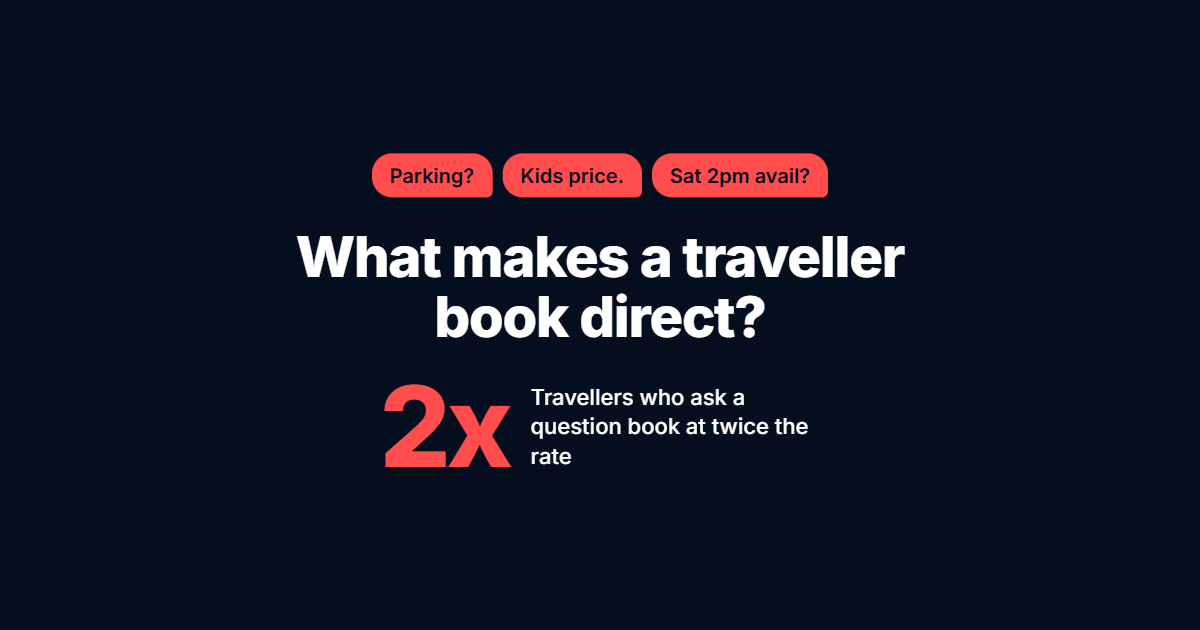
Every phone line has its regulars. Not the people, the questions.
"Can I move my booking to Saturday?"
"Is the tour still going in this wind?"
"I think I left my sunglasses on the boat."
Just another day in tourism.
Your Voice Agent can handle plenty of guest questions on its own. But some calls aren't quite so straightforward.
What happens when someone's running late and the boat leaves in 10 minutes? Or when a guest wants to cancel after hours?
Your team knows how you'd want these situations handled. But does your Voice Agent?
That's where Behavior Rules come in. Think of them as instructions you'd give a new team member. They tell your Voice Agent how to handle specific situations, whether that's sending an SMS link, checking availability when needed, or transferring a call.
Have something specific in mind? The Yonder team can add custom Behavior Rules to your Voice Agent. Here are a few ideas to get you started.
5 Ways to Put Behavior Rules to Work
We analysed nearly 22,000 real Voice Agent calls over a few months to identify common situations where Behavior Rules could help.
1. When the first choice isn’t available
A guest wants to book your 10 a.m. tour, but it's already full. That doesn't have to be the end of the conversation.
Instead of stopping at "Sorry, we're fully booked," your Voice Agent can check other times or experiences that might work for them.
Try these:
- "If a caller's preferred time is unavailable, check availability for other departures on the same day and offer those options."
- "If the experience they're asking about is fully booked, ask if they'd be interested in a similar experience and check availability before suggesting it."
2. Not every call needs a human
Let's start with the easy wins. Waiver links, meeting points, directions. Simple requests that can still end up interrupting your staff. Instead of transferring someone just to resend a waiver, let your Voice Agent handle it.
Try these:
- "If a caller asks about waivers, text them our waiver link and remind them that every guest needs to complete it before arrival."
- "If a caller is lost or can't find us, offer to text them our Google Maps link and explain the meeting point using a nearby landmark."
Worth knowing: Your Voice Agent can only text links that are available in your Knowledge Base, so make sure your waiver, directions, and other useful links are up to date.
3. When every minute counts
Someone's running late, their tour leaves in 10 minutes, and they're stuck in traffic. Not exactly the moment for a rundown of your arrival policy.
Whether it's a late arrival or a last-minute weather question, sometimes the best thing your Voice Agent can do is get someone to the right person, fast.
Try these:
- "If a caller says they're running late for a tour today, transfer them to our check-in team straight away."
- "If a caller asks whether today's tour is running due to weather, transfer them to our operations team. After hours, offer to text them our weather updates page."
4. The after-hours booking changes
A guest calling at 9pm to cancel tomorrow's tour still needs a clear next step. Behavior Rules help your Voice Agent know what to do, even when your team has gone home.
Try these:
- "If a caller wants to cancel or reschedule during business hours, transfer them to our reservations team."
- "If a caller wants to cancel or reschedule after hours, explain our cancellation policy, offer to text them our Manage Booking link, and suggest leaving a voicemail."
- "If a caller asks to speak to staff outside business hours, explain that our team is unavailable and suggest leaving a voicemail."
5. The calls worth transferring
Not every transfer is a bad thing. Group bookings, private charters, and corporate events are exactly the kinds of conversations you might want your team handling personally.
The same goes for lost property and third-party vouchers that need a little extra attention.
Try these:
- "If a caller asks about a group of 15 or more, a private charter, or a corporate event, transfer them to our events team."
- "If a caller wants to book using a Groupon or third-party voucher, ask them to have their voucher code ready and transfer them to our reservations team."
- "If a caller has lost something, ask what it was and which tour they were on, then transfer them to our office. After hours, suggest leaving a voicemail with those details."
The goal isn't to eliminate transfers. It's to make sure the right calls reach the right people.
6. The classic "Can I speak to someone?"
We've all heard this one. A caller asks to speak to a real person, but doesn't say what they need help with.
Sometimes they genuinely need your team. Other times, it's a question your Voice Agent could easily answer. Behavior Rules let you decide how your agent handles these requests.
Try one of these:
- "If a caller asks to speak to someone, ask what they need help with so you can direct them to the right team. If they still want a person, transfer them."
- "If a caller asks to speak to a staff member, transfer them straight away."
Neither approach is necessarily right or wrong. It's about choosing what works best for your guests and your team.
Your business. Your rules.
No two tourism businesses run exactly the same way, and your Voice Agent shouldn't have to either.
Behavior Rules aren't something you need to set up yourself. If you'd like to add or update a rule, simply email support@yonderhq.com with what you'd like your Voice Agent to do. Our team will configure and test it for you.
Your team knows how things work. Now make sure your Voice Agent does too.